Sunday, January 31, 2010

Morocco's Recent 'Revolution'


A recent and new law in Morocco is the women's right. It is called 'Moudawana' passed by a majority for the members of the Moroccan parliaments. Women are granted more power.

This are some of the codes i have found doing research (Wikipedia) :
-Couples have to go to a secular court to obtain a divorce rather than just getting a letter of repudiation from a religious official. (See Islamic marital jurisprudence).
-The parent who keeps custody of the children also keeps the house.
-The legal age of marriage is 18 instead of 15.
-Sexual harassment is an offense punished by law.
-Polygamy, while still allowed, became more difficult under the new Mudawana in 2003.

I think that this kind of law/revolution is and will be very useful. It will establish a new kind of help meaning that women are able to communicate their knowledge and help to the world. Women will be able to contribute other than just take care of houses and be of a great help to improving the problems in the word and help find many more solutions. Who knows how much help women may be able to contribute like it is said "Two brains are better than one".

Information source:http://en.wikipedia.org/wiki/Mudawana

Thursday, January 21, 2010

Seminar


During the Socratic Seminar one of the valuable points that was discussed was that conflict may bring lots of changes to a region. It may cause a confusion and misorder of government, a decrease of economy, a great change in politics, and ruins on the regions where the battles where fought.
The dialogue moves forward by the ideas of people who are interested in the conversation, therefore other people join and ask questions and put their own ideas into the discussion.
The people that joined the discussion didn't have the same ideas but instead of saying it was not right they added to what others said or changed it abit and added what they have in mind.
People dominated the discussion, yes, and the group contributed to what was said.
It was harder to listen to what was said when people are outside the discussion, but it soon changes when someone have a creatiuve answer.
The essential questions where answered but understood well, and this shows that the seminar is very important because we learn from other people's understanding and thinking.
If ever i changed my opinion throughout the discussion it would be because other people had creative ideas and i would look differently into my own ideas and change them.
The best part of the seminarwas that we all helped and had fun sharing ideas.
There wern't rlly any worst part.
I wouldlike to have more time,just when we get to class we start instead of starting after 20 of class.

Economy- Petrol and gasoline- US


The world's prices of oil fell Thursday as the traders reacted to rising US gasolinestockpiles. Weak demands in the world's biggest energy consumers.
The light sweet crude for the March delivery lost 80 cents-79.6 dollars a barrel (in New York's main contract).
In the US Department of Energy aired thursday that gasoline/petrol rallied on 3.9 million barrels in the week which is ending January 25 striking a 2 year high.
The US crude stocks fell by 400,000 barrels last week. This would be their lowest rate 2 decades apart from immediate aftermath of a hurricane.


Monday, January 11, 2010

Successes and Failure of the Reconstruction

Failures:
-Ku Klux Klan is a group of people who named their group "Kuklos" because it meant 'circle' in Greek. The people in that group wore robes and masks. This is because they pretended to be ghosts, Confederate ghosts. That they were in revenge against the enemies of the South. The new freedom of the black southerners would be beaten up or even killed.
- The South wasn't as industrialized as the North (southern industries didn't make finished goods like furniture) most of the South's industrial growth came from cotton.
- Lots of corruption (massive change and growth, wasn't controllable) .
- Many black people after being slaves did not have the money to live in a home, with a job, and food. They were trapped in this kind of poverty.
-People were still being racist, in the North and the South.

Successes:
- Enforcement Act of 1870 (helped as a law the black people who were tortured, beaten up, or killed by the Ku Klux Klan).
- Promoting business (growth of business would bring better time).
- Compromise of 1877
- Fourteenth and Fifteenth amendment guaranteed the African Americans the right of citizenship.

There were lots of things happening during the Reconstruction. The South was still needing of help, but mostly the black people that had to fight for a living because of the threats and harassment from the Ku Klux Klan which was unbearable. Though the South had problems with the industrialization, they would still trade with the North who needed that cotton too, for furniture or food. Many laws were put to help the black families, but some were not respectful to the law and disagreeing with it, so even if the law supported the black and helped some people still didn't obey it.

Information Source: America Pathway to the Present

Thursday, December 10, 2009

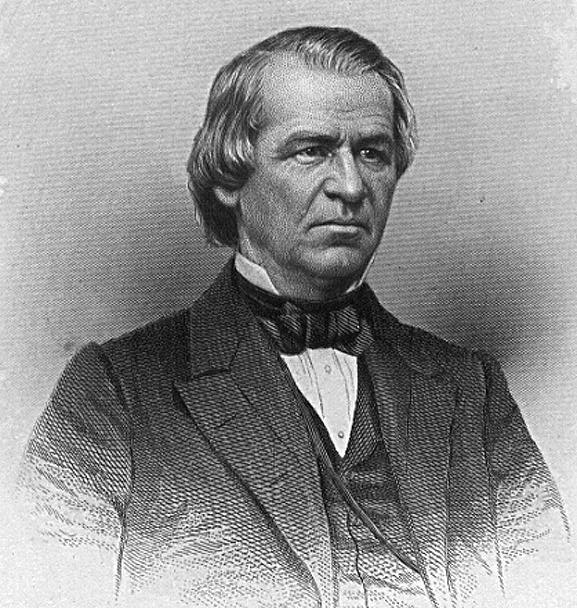
Johnson's laws and reconstruction plan


Andrew Johnson gave pardon to the Confederates, he restored the state governments, and the white leaders of the governments he restored passed laws that severely restricted African Americans newfound freedoms. And those laws were known as the black codes.

Black men and women had a curfew which states that they can not gather after sunset. They also had vagrancy laws which says that freedmen that are convicted of vagrancy would be fined, whipped, or sold for a years labor.Labor contracts states that freedmen have to sign a contract from January for a year of work, and they couldn't drop in the middle because if they did they would give all the wages they have earned. There were also land restriction,which says that freedmen would be able to rent a land or home only in rural areas. They were sort of forced to live in plantation.

The Congress created the 14Th Amendment which made all citizens of the United States would not be able to enforce or make any law which abridges the privileges (immunities) of citizens of the United States; no State can deprive anyone of life, liberty, or property without its jurisdiction equal protection of the law.
The 15Th Amendment states that it is possible for any black men or women to participate in an election for presidency.

Radical Reconstruction were small in group but increasingly influential. Republican thought of themselves as moderates.
Moderates and Radicals both opposed/disagreed with Johnson's Reconstruction policies. They also opposed the spread of the black codes and favored the spread/expansion of the Republican Party in the South. Though moderates did not really want to grant the African Americans civil rights such as voting rights and equal treatment.

Carpetbaggers are Northern Republicans who moved to the postwar South. This insulting nickname was given by the Southern; it was referred to the cheap suitcase they had made of carpet scraps. They were said to be greedy men who were seeking to grab/take power. Though historians say that they were honest and educated men.

Scalawags: In the postwar South, they thought that to be white and a southerner and a Republican was seen as a traitor. Southerners had a nickname for those white southern Republican. The word scalawags means "scrawny cattle" (Scottish) some of these scalawags were former Whigs who opposed secession.

Image source: http://upload.wikimedia.org/wikipedia/commons/7/7c/Andrew_Johnson.jpg

After the Civil War


Both the South and North had damages that they had to take care of. The South had many farms burned down and houses ruined. Their life stock and crops were burned and gone. Slaves now looked for jobs and old slave owner weren't able to give them a jobs because they practically ran out of money. Many people in the south were dead (260 million).
The North won the war but lost MANY people (364 million) since the battles happened in the south many men had to transport their food and things they needed such as weapons. Unfortunately this was harder for the northern soldiers and so this is why they have lost more men than the southern. The North did not damage their buildings and industries as much as the South did because as i said before most battles happened in the Southern territories.
Railroads, canals, live stocks, and many things have gone away with the war. It would take a lot of time to rebuild all of that and all the industries and school they have lost.

The war created much more damage than just destroying things. The currency dropped really low. People did not have a lot of many at all, practically none at all. People were looking for jobs, mostly black people who were slaves before and need many to eat and survive.
Since the war was lost for the Southerners, most of them blamed the black people for that. (Not supported fact but an analysis) : they probably were beaten down or insulted and racism was happening more often then it used to because they thought the black were the cause of this war and the lose of all the things they really needed.

After Lincoln's death, Andrew Johnson was the next president because he was the vice president before Abraham Lincoln's death.
Johnson pardoned the south who now joined the union again. He gave permission to each state to hold a constitutional convention, but didn't put the 10 percent allegiance requirement Lincoln was going to put. Johnson was more generous to the south though he reflected the spirit of Lincoln's 10 percent plan. He denied the pardon for the Confederate leaders.

Image source: http://www.health-res.com/EX/08-01-08/civil-war-113.jpg

Monday, November 30, 2009

John Brown


John Brown was an American abolitionist. He was an anti-slave and wanted to end all slavery.In 1856 he led the Potawatomie Massacre in Kansas which was then called 'Bleeding Kansas'.

Abraham Lincoln said the John Brown was a "misguided fanatic" from that people called him "the most controversial of all 19th-century Americans".
Brown was someone that demanded violent action to fight for no slavery. While other Northerners wanted to peaceful resistance.

John Brown had a major role in the starting of the Civil War. He became known to be heroic martyr and a visionary. Sometimes he was thought to be a madman and a terrorist.

Information source: http://en.wikipedia.org/wiki/John_Brown_(abolitionist)
Image source: http://upload.wikimedia.org/wikipedia/en/0/07/John_brown_abo.jpg